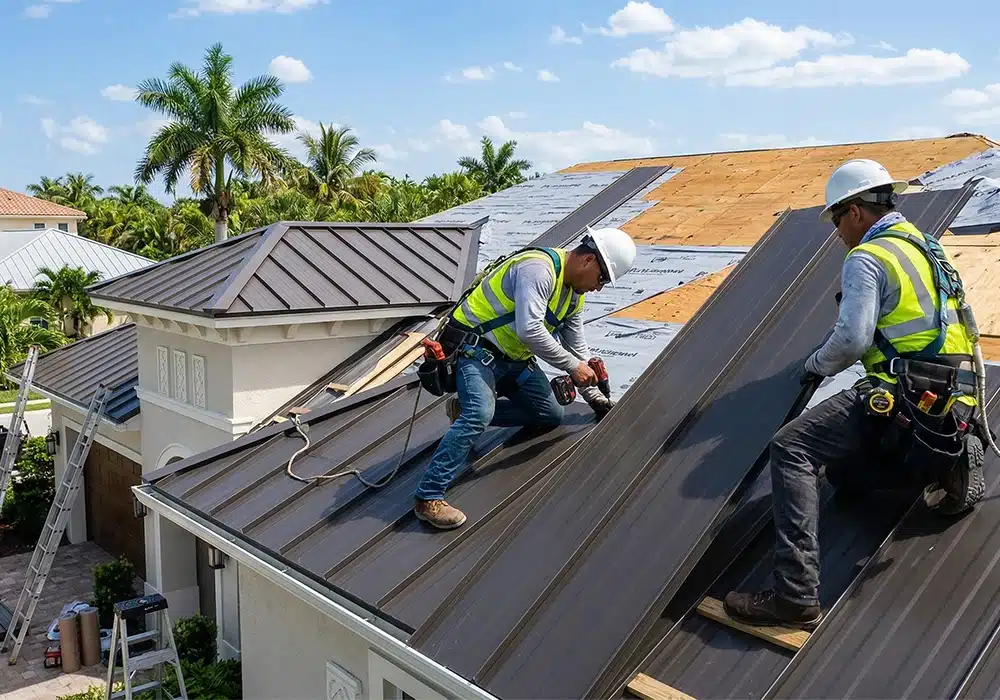
In Palm Beach County, heavy rain, intense sun, and hurricane-force winds degrade inferior roofing materials quickly. Metal roofing provides high wind resistance and long-term durability, but homeowners often face confusion when selecting the exact specifications.
Choosing the right metal roof involves more than just picking a color. Understanding the specific differences in metal thickness, seam styles, and locking mechanisms prevents costly mistakes and ensures the property remains structurally sound and fully protected under severe weather conditions.
Metal Thickness: 24 Gauge vs. 26 Gauge
In metal roofing, a lower gauge number indicates a thicker material. A 24-gauge panel is thicker and stronger than a 26-gauge panel.
Thicker metal (24-gauge) resists denting from flying debris and offers higher wind uplift resistance. This structural rigidity is highly beneficial during hurricane season in South Florida. While 26-gauge is less expensive and works well for many standard applications, it is more susceptible to cosmetic damage and provides slightly less structural stiffness during extreme weather events.
- Pro Tip: If your property has large trees overhanging the roof, investing in 24-gauge metal significantly reduces the risk of visible dents from fallen branches.
Panel Profiles: 5V Crimp vs. Standing Seam
The profile of the metal dictates how it attaches to the roof deck, which directly impacts upfront costs, maintenance schedules, and long-term water resistance in Palm Beach County.
5V Crimp panels provide a classic, traditional look that many South Florida homeowners prefer. This profile uses exposed fasteners, meaning screws are driven directly through the top of the metal panel into the roof deck.
Because the installation process is straightforward, 5V Crimp offers a lower upfront cost and faster installation time. The known trade-off is routine maintenance; the rubber washers on the exposed screws eventually dry out under the sun and require periodic inspection and replacement to keep the roof watertight.
Standing Seam panels feature concealed fasteners. The screws are hidden securely under the metal seams, protecting them from UV rays and moisture. While the initial investment is higher and installation takes more time than 5V Crimp, this design drastically reduces the need for fastener maintenance over the lifespan of the roof.
When selecting Standing Seam, homeowners can also choose the rib height, typically 1 inch or 1.5 inches. A 1.5-inch rib provides deeper channels, offering better water shedding capabilities during heavy tropical downpours.
Locking Mechanisms: Snap Lock vs. Mechanical Seam
For Standing Seam roofs, the individual metal panels must connect securely to form a watertight barrier.
Snap Lock panels are designed to simply snap together over fastening clips. This design allows for thermal expansion and contraction as the metal heats up during the day and cools at night. They are faster to install, which helps lower overall labor costs.
Mechanical Seam panels are physically folded and crimped together using specialized tools on the job site. This process creates an exceptionally tight lock. While installation takes longer and costs more upfront, mechanically seamed roofs offer the highest wind uplift ratings available.
- Tip:
For most residential properties from Boca Raton to West Palm Beach, Snap Lock offers excellent performance. However, Mechanical Seam provides maximum security for coastal homes directly exposed to high-velocity winds.
Material Finish: Galvalume vs. Painted Metal
Homeowners also need to select the finish of the metal, which affects both longevity and cooling costs.
Bare Galvalume is a steel core coated with a precise mixture of aluminum and zinc. It offers excellent corrosion resistance and reflects heat effectively, lowering daily cooling costs. However, it has a uniform, industrial metallic look that may not match all residential architectural styles.
Painted metal roofs use advanced, factory-applied coating systems over the metal substrate. These finishes provide the same protective benefits while offering a wide variety of colors. Premium paints resist fading and chalking under UV exposure, maintaining the visual integrity of the property for decades.
How Dryout Roofing Protects Your Investment
The highest quality metal panel will fail if installed incorrectly. Proper installation requires precise measurement, specialized tools, and strict adherence to local Palm Beach County building codes.
Dryout Roofing brings 20 years of hands-on experience to every roofing project, ensuring all materials are installed strictly to manufacturer specifications. As an Owens Corning Preferred Contractor, we know that dealing with roof replacements disrupts daily routines. That is why we provide detailed estimates within 24 hours and complete most roofing installations in just 5 to 7 days, securing your property quickly and efficiently.
Stop Guessing and Get the Exact Metal Roof Your Property Needs
Selecting the correct metal thickness and seam profile dictates how well your property withstands Palm Beach County weather. A mismatched metal roofing system leads to rusted fasteners, wind damage, and premature replacement.
Instead of guessing which gauge or locking mechanism fits your budget and location, rely on professional guidance. Dryout Roofing evaluates your specific structural requirements and provides a precise recommendation that maximizes your investment.
Protect your property with the right materials. Call (772) 631-3223 today to schedule a site visit and receive a detailed estimate within 24 hours.