Introduction
When homeowners in South Florida think about roof protection, shingles usually get the most attention. Their color, durability, and wind rating all matter, but another layer beneath them can make a significant difference when severe weather damages the roof covering.
That layer is the underlayment, particularly a properly installed
secondary water resistance (SWR) barrier.
During a tropical storm, shingles can loosen, crack, or blow away, exposing the roof deck to wind-driven rain. Without adequate protection beneath the shingles, water may enter the attic and damage insulation, ceilings, and interior finishes.
This is why homeowners researching
peel and stick roof underlayment Florida should look beyond the visible roofing material. A self-adhered underlayment can create a continuous protective layer over the roof deck, helping limit water intrusion when the primary roof covering is compromised.
For homes in Lake Worth, West Palm Beach, Boca Raton, and throughout Palm Beach County, understanding this layer is an important part of evaluating a roof replacement.
Dryout Roofing brings more than 20 years of roofing experience to South Florida homeowners, with professional inspections, quality-focused installation, and free estimates within 24 hours.
What goes underneath your shingles?
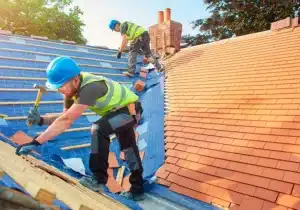
A residential shingle roof is a system of layers that work together to protect the home.
A simplified cross-section looks like this:
Top to bottom:
- Asphalt shingles: The primary exterior covering that sheds most rainfall.
- Underlayment: A protective layer beneath the shingles that provides additional resistance to water intrusion.
- Roof deck: The structural wood surface to which the roofing assembly is attached.
- Roof framing: The rafters or trusses that support the deck and roofing system.
Each component has a different function. Shingles direct water down the roof, while the underlayment provides another line of defense if water passes beneath the covering.
The roof deck supports the assembly, and the framing carries the structural loads.
A high-quality roof replacement must account for all these components, not just the shingles visible from the street.
How secondary water resistance protects your home
A secondary water resistance barrier is designed to provide additional protection against water entering through the roof deck when the primary covering is damaged or displaced.
This matters during hurricanes and tropical storms, when wind can lift shingles and allow rain to reach areas that would normally remain protected.
How a peel-and-stick barrier works
Self-adhered underlayment typically consists of a waterproof membrane with an adhesive backing and a removable release liner.
During installation, the liner is removed and the membrane is bonded directly to a properly prepared roof deck. When installed according to the manufacturer’s instructions, the material can form a continuous barrier across the protected surface.
Some systems are specifically designed and evaluated for secondary water resistance applications.
The benefit is straightforward: if shingles are damaged, the membrane can help prevent water from passing through the roof deck and entering the home.
However, protection depends on the product, installation quality, roof geometry, and treatment of seams, edges, penetrations, and transitions. No underlayment makes a roof completely immune to hurricane damage.
Why South Florida homeowners should care
In Palm Beach County, intense rain and high winds can expose weaknesses in roofing systems.
A properly installed secondary barrier provides an additional layer of protection that can help reduce interior water damage if the outer covering fails.
For homeowners planning a roof replacement, it is worth asking the contractor exactly which underlayment will be installed and whether it qualifies as a secondary water resistance system.
Peel-and-stick vs. traditional felt underlayment
Traditional asphalt-saturated felt has been used beneath shingles for decades. Modern synthetic underlayments and self-adhered membranes offer additional options, each with different performance characteristics.
Traditional felt
Felt underlayment is typically installed in overlapping courses and fastened to the roof deck.
It provides a secondary layer beneath the shingles, but it is not automatically equivalent to a continuous, self-adhered waterproof membrane.
Depending on the product and installation, water may be able to travel through fastener penetrations or beneath overlapping seams if the material becomes exposed to significant moisture.
Peel-and-stick underlayment
Self-adhered membranes bond directly to the roof deck and can help seal around compatible fasteners when properly installed.
Their waterproof properties make them especially valuable when the goal is to establish a secondary water resistance barrier.
For homeowners evaluating
self adhered roof underlayment West Palm Beach contractors recommend, the key is to distinguish between a general underlayment and a system specifically designed and approved for secondary water resistance.
Which option is better?
For creating a qualifying secondary water resistance barrier, an approved self-adhered system may offer advantages over conventional felt because it can create a more continuous waterproof layer.
However, the best roofing assembly depends on the applicable code, the roof design, the manufacturer’s requirements, and the selected shingle system.
A contractor should explain the differences instead of treating every underlayment product as interchangeable.
Why proper installation matters
Even a high-performance membrane can fail to provide its intended protection if it is installed incorrectly.
The roof deck must be properly prepared, and the membrane must be applied according to the manufacturer’s specifications.
Important details include:
- Deck preparation: The surface must meet the product’s requirements for cleanliness, dryness, and condition.
- Seams and overlaps: Connections must follow the manufacturer’s specified overlap and sealing requirements.
- Roof edges: The membrane must be integrated correctly with the applicable edge and flashing details.
- Penetrations: Pipes, vents, and other openings require appropriate waterproofing details.
- Valleys and transitions: These areas need careful detailing because they concentrate water flow.
- Fasteners: The roofing assembly must use compatible fastening methods and follow the approved installation instructions.
An incorrectly installed membrane may leave gaps or vulnerable transitions that allow water to bypass the intended barrier.
That is why homeowners should evaluate a roofing contractor’s installation practices, not just the materials listed on an estimate.
Dryout Roofing emphasizes professional inspections, clear communication, and quality workmanship throughout its roofing projects.
Florida building code and roof deck sealing
Florida’s building code establishes requirements for roofing systems, including underlayment, wind resistance, and applicable secondary water resistance provisions.
However, not every peel-and-stick product automatically satisfies every code requirement.
Compliance depends on the applicable code edition, the product’s approval and intended use, the roofing assembly, and the installation method.
When researching
roof deck sealing Florida building code requirements, homeowners should ask their contractor:
- Does the proposed membrane qualify as a secondary water resistance barrier?
- Is the product approved for the intended roof assembly?
- Does the installation comply with applicable Florida Building Code requirements?
- How will seams, penetrations, valleys, and roof edges be handled?
- Will the completed roofing system meet the requirements for the property’s permit?
A self-adhered membrane is not necessarily the same as a complete roof deck attachment or wind-mitigation upgrade. These are related but distinct aspects of roof performance.
For homeowners in Lake Worth, Boca Raton, Boynton Beach, Delray Beach, and West Palm Beach, a professional contractor can explain which protective layers are appropriate for the specific property.
When to consider a roof replacement
If your existing roof has recurring leaks, widespread shingle damage, or signs of deterioration, replacing the outer covering alone may not address the entire problem.
A professional
Roof Inspection can help determine whether localized
Roof Repair is sufficient or whether a complete
Roof Replacement is the better long-term option.
During a replacement, homeowners have an opportunity to discuss the condition of the roof deck, underlayment options, and whether a qualifying secondary water resistance system makes sense for their property.
Dryout Roofing has more than 20 years of roofing experience, is fully licensed and insured, and is an Owens Corning Certified Contractor. The company is also Google Guaranteed and BBB accredited.
Its team provides free estimates within 24 hours, and typical roof replacement projects take five to seven days, depending on weather and project conditions.
Before approving an estimate, ask for a clear explanation of the proposed roofing assembly, including the underlayment type and how the installation will comply with applicable requirements.
Frequently asked questions
What is peel-and-stick roof underlayment?
It is a self-adhered roofing membrane installed directly onto the roof deck to provide an additional layer of water protection beneath the primary roof covering.
Is peel-and-stick underlayment better than felt in Florida?
For creating a continuous secondary water resistance barrier, an approved self-adhered membrane can offer advantages over conventional felt. The appropriate choice depends on code requirements, product approval, and the roof assembly.
Does secondary water resistance prevent all roof leaks?
No. It provides an additional layer of protection if the roof covering is compromised, but performance depends on installation, system design, and the extent of storm damage.
Does Florida require peel-and-stick underlayment?
Requirements depend on the applicable code edition, roof type, building conditions, and selected assembly. Not every product or property is subject to identical requirements.
Can peel-and-stick underlayment help if shingles blow off?
Yes. A qualifying membrane may help prevent water from entering through the roof deck when shingles are displaced, provided the barrier was properly installed and remains intact.
How can I tell whether my roof has a secondary water resistance barrier?
Review your roofing documentation or ask a qualified contractor to inspect the system. The membrane is generally concealed beneath the roof covering, so visual confirmation from the ground is not possible.
Conclusion + CTA
Shingles may be the most visible part of your roof, but the layers underneath them play a critical role in protecting your home from water intrusion.
For South Florida homeowners, a properly installed secondary water resistance barrier can provide valuable protection when tropical storms damage the outer roofing material. Understanding the difference between conventional felt and self-adhered membranes helps you ask better questions before investing in a roof replacement.
Dryout Roofing helps homeowners throughout Lake Worth, Lantana, Boca Raton, Boynton Beach, Delray Beach, Wellington, Greenacres, Palm Springs, Royal Palm Beach, West Palm Beach, Palm Beach Gardens, and surrounding South Florida communities make informed roofing decisions.
With more than 20 years of experience, licensed and insured professionals, Owens Corning Certified expertise, and free estimates within 24 hours, the team can evaluate your roof and explain the options available for your property.
Planning a roof replacement? Ask what’s going underneath your shingles, not just what’s going on top.
Call
(772) 631-3223 today to schedule your free roof inspection and estimate.